Understanding cerebral palsy
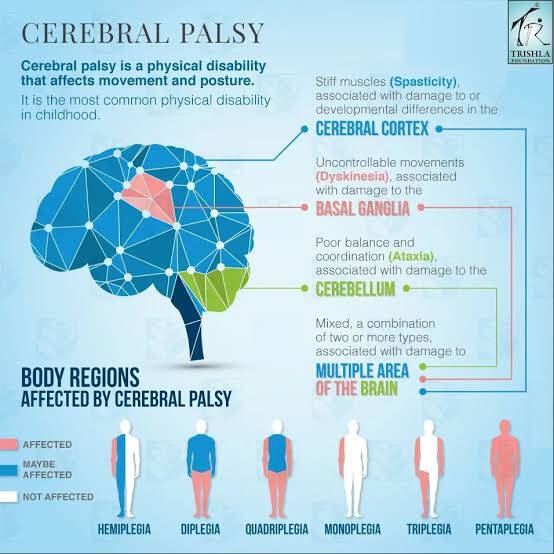
Cerebral palsy (CP) is a group of permanent disorders appearing in early childhood, characterized by developmental delay, impaired muscle tone, posture, and movement. It's the most common motor disability in childhood, affecting millions globally. At Bungoma Cerebral Palsy, we believe that understanding is the first step towards support and inclusion.
Causes and risk factors
- Brain injury or abnormal development before, during, or after birth
- Premature birth or low birth weight
- Infections during pregnancy (e.g., rubella, toxoplasmosis)
- Head trauma or brain injury
- Genetic mutations
Types of cerebral palsy
- Spastic (stiff muscles): Most common type, characterized by muscle stiffness and increased reflexes.
- Dyskinetic (uncontrolled movements): Involuntary movements, such as twisting or jerking.
- Ataxic (balance and coordination problems): Difficulty with balance, coordination, and walking.
- Mixed: Combination of spastic, dyskinetic, and ataxic symptoms.
Common symptoms
- Delayed motor skills (e.g., rolling, sitting, walking)
- Muscle stiffness or flaccidity
- Poor coordination and balance
- Tremors or involuntary movements
- Speech and swallowing difficulties
- Seizures (in some cases)
Treatment and management
- Physical therapy (PT) and occupational therapy (OT)
- Medications for muscle spasms, seizures, and pain
- Surgery (e.g., tendon lengthening, orthopedic procedures)
- Assistive devices (e.g., wheelchairs, walkers, braces)
- Speech and language therapy
- Education and support for individuals and families
Prognosis
CP is a lifelong condition, but with proper management, individuals can lead fulfilling lives. Early intervention and therapy can significantly improve outcomes. Many individuals with CP live into adulthood, with varying levels of independence.
Key facts and common misunderstandings
For parents, caregivers, and the general public, accurate information about Cerebral Palsy is crucial. We aim to clarify common misconceptions and highlight important aspects of living with CP, fostering a more inclusive and understanding community.
CP is not a single condition, but a spectrum.
Cerebral palsy is a group of disorders with varying symptoms and severity. It's not just one type or level of disability; each individual experiences CP uniquely, requiring personalized care and understanding.
People with CP are not defined by their condition.
Many individuals with CP lead fulfilling lives, with their own goals, interests, and contributions. They're not "suffering from" or "cursed by" CP; they are individuals with unique strengths and challenges who deserve respect and opportunity.
Is CP contagious?
No, Cerebral Palsy is absolutely not contagious. It results from brain injury or abnormal development, not from infection spread person-to-person.
Is wheelchair use a defining characteristic of CP?
No, while some individuals with CP use wheelchairs, many walk independently or use other mobility aids. Mobility varies greatly among individuals with CP, and a wheelchair is just one type of assistive device, not a universal defining characteristic.
CP is not just a physical disability.
While motor impairments are a hallmark of CP, many individuals also experience associated conditions like seizures (up to 50%), communication difficulties (up to 80%), intellectual disability (about 30-50%), vision and hearing impairments, and pain or discomfort. A holistic approach to care is essential.
Are all people with CP intellectually disabled?
No, this is a common misconception. While some individuals with CP may experience intellectual disability, many do not. Cognitive abilities vary widely, and it's inaccurate to assume intellectual impairment based solely on a CP diagnosis.
Is CP a result of witchcraft or a curse?
Absolutely not. Cerebral Palsy is a medical condition with scientifically understood causes related to brain development or injury, not supernatural forces. Such beliefs can lead to stigma and prevent individuals from receiving necessary medical care and support.
Join our journey for a better future
At Bungoma Cerebral Palsy, we are committed to creating a world where individuals with CP thrive. Your understanding and support can help us reach our goals: establishing a special care facility and school, advocating for social health fund enrollment to ease medical costs, and hosting vital annual awareness events like Cerebral Palsy Awareness Month in March and World Cerebral Palsy Day on October 6th. Together, we can make a profound difference.